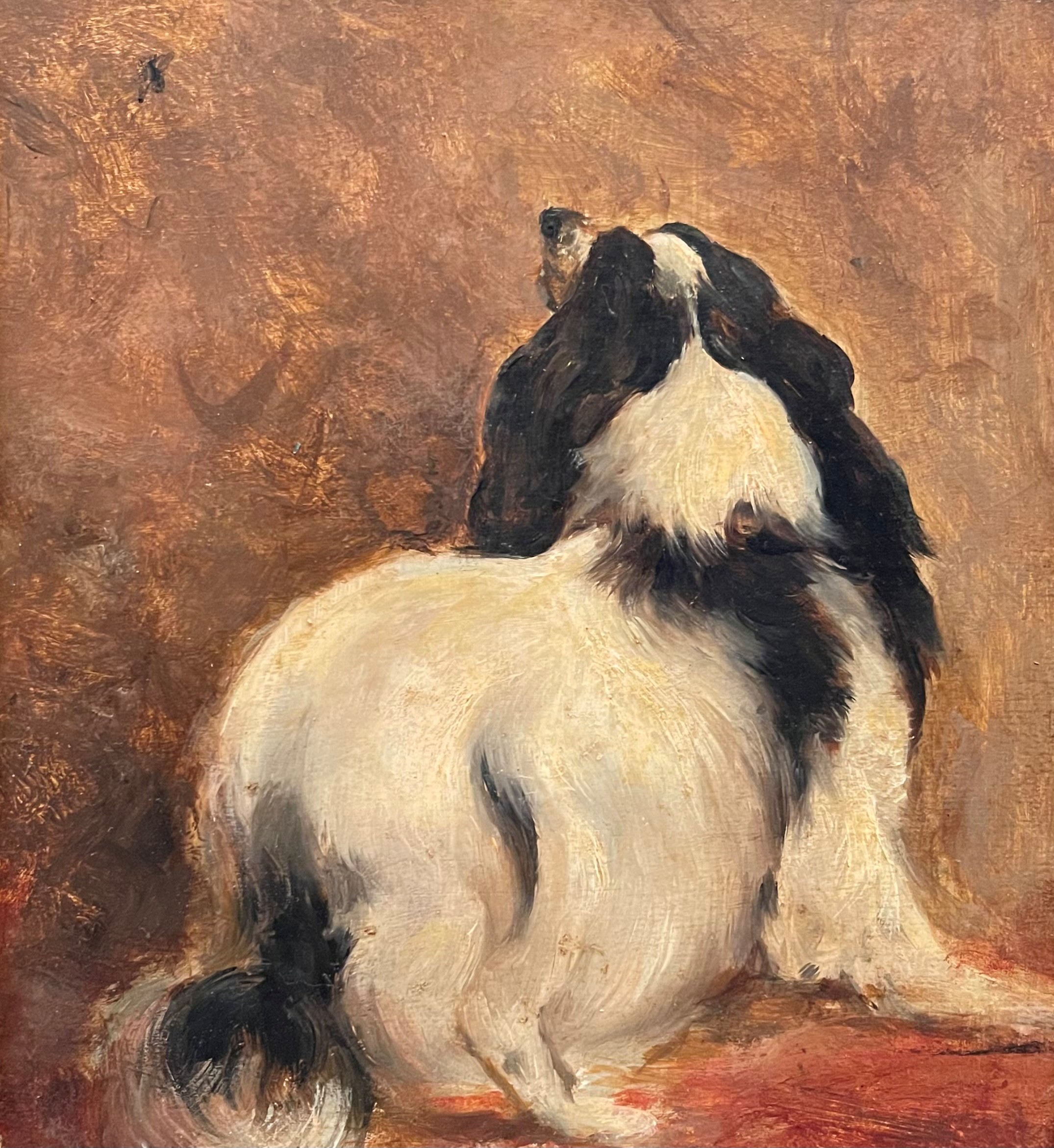
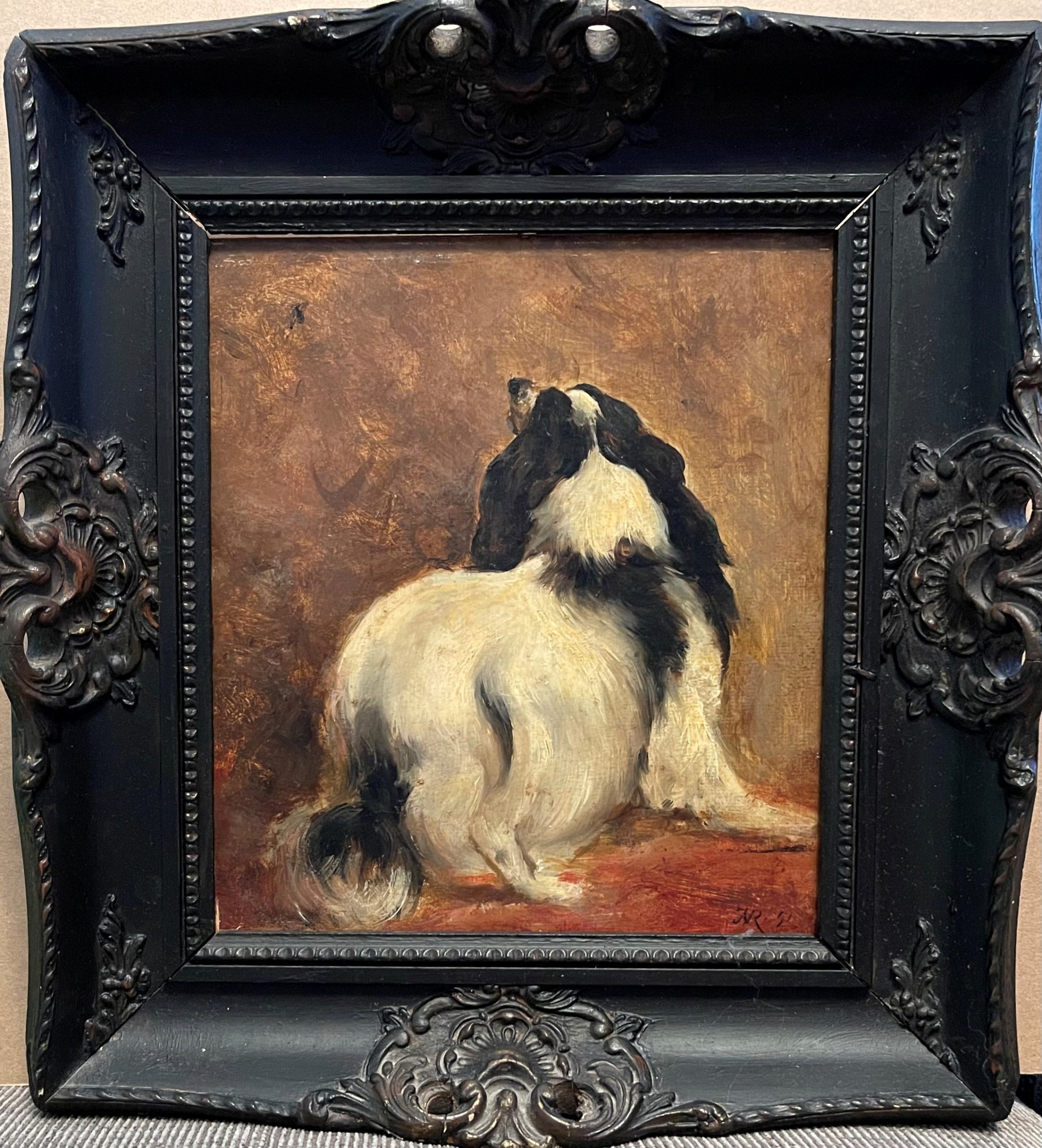

Henriëtte Ronner-Knip is sometimes associated with the Belgian School, although she was born and raised in Holland and did not relocate to Belgium until the age of twenty-nine. While she is best known today for her celebrated paintings of cats, Ronner was also an accomplished and highly regarded painter of dogs. She came from a distinguished family of artists: her father and grandfather were painters, as were her uncle and aunt, providing her with an artistic upbringing that strongly shaped her career.
Ronner exhibited her work publicly for the first time at the age of fifteen in Düsseldorf. Encouraged by the sale of her early paintings and supported consistently by her father, she committed herself fully to an artistic career. During her early years, she produced a wide range of subjects, including animals, interiors, market scenes, and landscapes, exhibiting successfully in both Holland and Germany. In 1850, Ronner and her husband moved to Brussels, where she continued to paint and where her professional reputation steadily expanded.
Ronner’s artistic production is generally divided into three distinct periods. In the first, she explored a broad variety of subject matter. The second period, lasting approximately fifteen years, was devoted primarily to the painting of dogs. In the third and most widely recognized phase of her career, she focused almost exclusively on cats and kittens, works that would later secure her international fame.
Although her dog paintings are less well known today than her feline subjects, they are no less accomplished or engaging. Animal painting was enormously popular in the mid to late nineteenth century, and Ronner’s work appealed to both the aristocracy and the growing middle class. She counted among her patrons’ members of the Belgian Royal Family and their circle. In 1876, Ronner painted two favorite dogs of the Queen of the Belgians to great acclaim, and the Queen’s patronage was soon emulated by her friends and relatives. She also painted the pet dog of the Countess of Flanders, the Queen’s sister-in-law. In recognition of her achievements, Ronner was awarded the Cross of the Order of Leopold by the King of the Belgians in 1877 – an honor rarely bestowed upon a woman at the time. Her royal patronage extended beyond Belgium to include Emperor Wilhelm I of Germany, the Spanish Royal Family, and the Princess of Wales, underscoring her international stature during her lifetime.