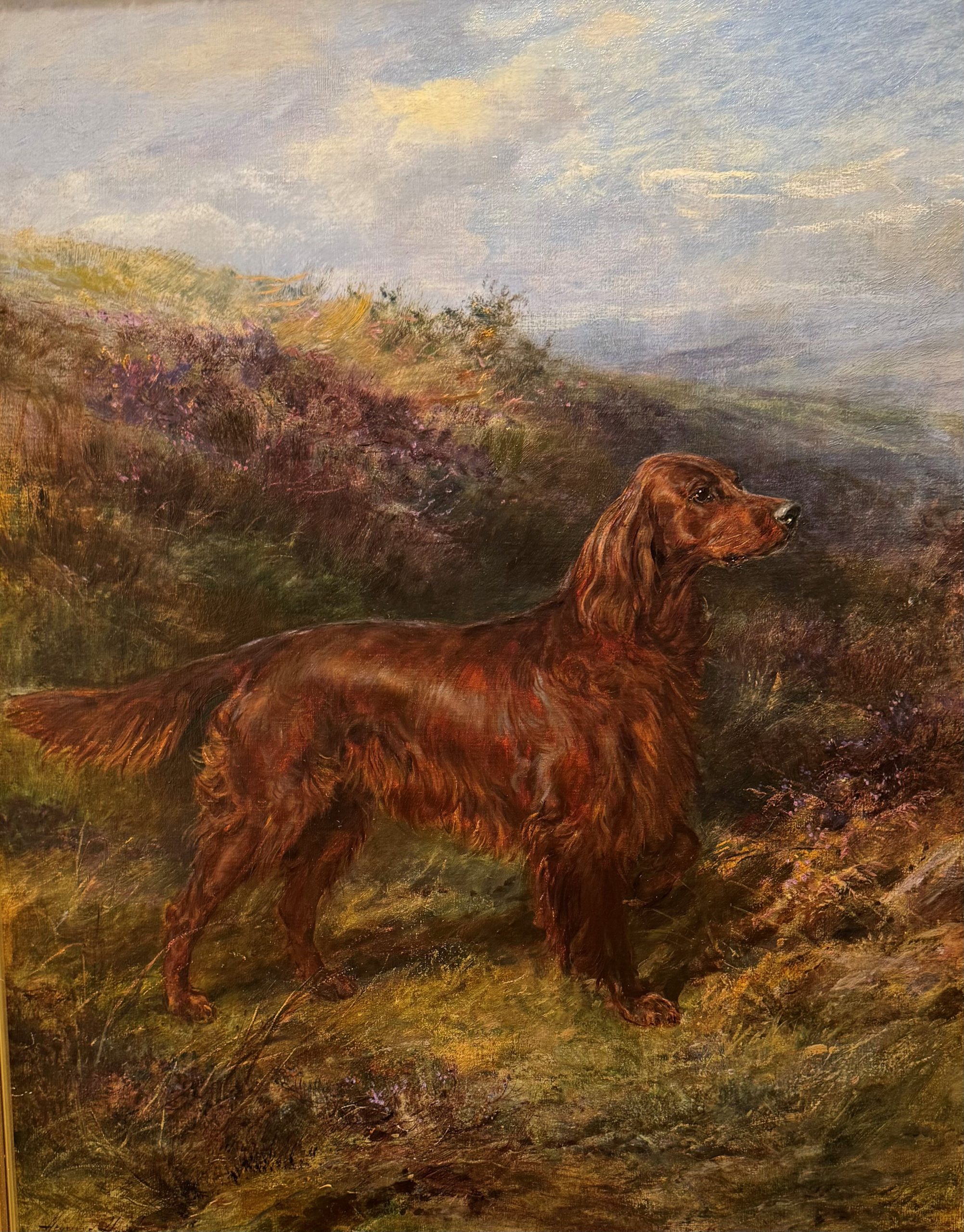
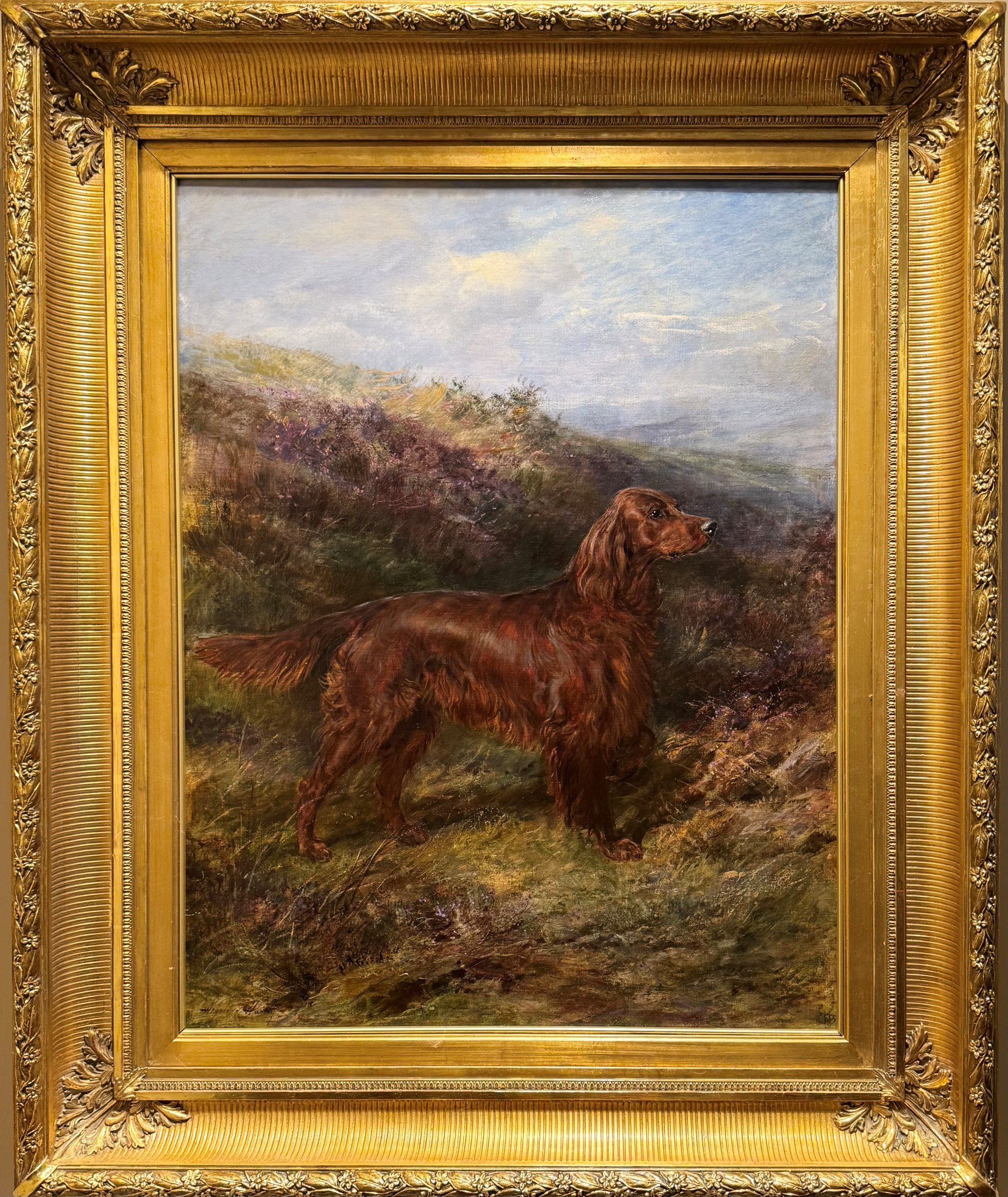

Heywood Hardy (1842–1933) was a British painter best known for his elegant depictions of sporting dogs, horses, hunting scenes, and rural sporting life. Born in Chichester, Sussex, he came from an artistic family that included his father, portrait painter James Hardy Sr., his brother, the painter James Hardy Jr., and his nephew, the celebrated animal painter Herbert Thomas Dicksee.
Hardy studied at the Royal Academy Schools and later worked in Paris, where he absorbed contemporary French painting and refined his approach to figure and landscape composition. Early in his career he painted historical subjects, but he soon became renowned for equestrian and sporting scenes that combined narrative charm with careful observation of horse anatomy and movement.
A frequent exhibitor at the Royal Academy of Arts, Hardy gained a strong reputation among Victorian patrons for sporting dogs, scenes of hunting parties, riders preparing to set out, and quiet moments in the countryside. His paintings are distinguished by fluid brushwork, balanced compositions, and a particular sensitivity to light and atmosphere.
Today, Heywood Hardy is regarded as one of the leading British sporting painters of the late nineteenth and early twentieth centuries. His work remains highly sought after by collectors for its refinement, storytelling quality, and enduring evocation of the English sporting tradition.